

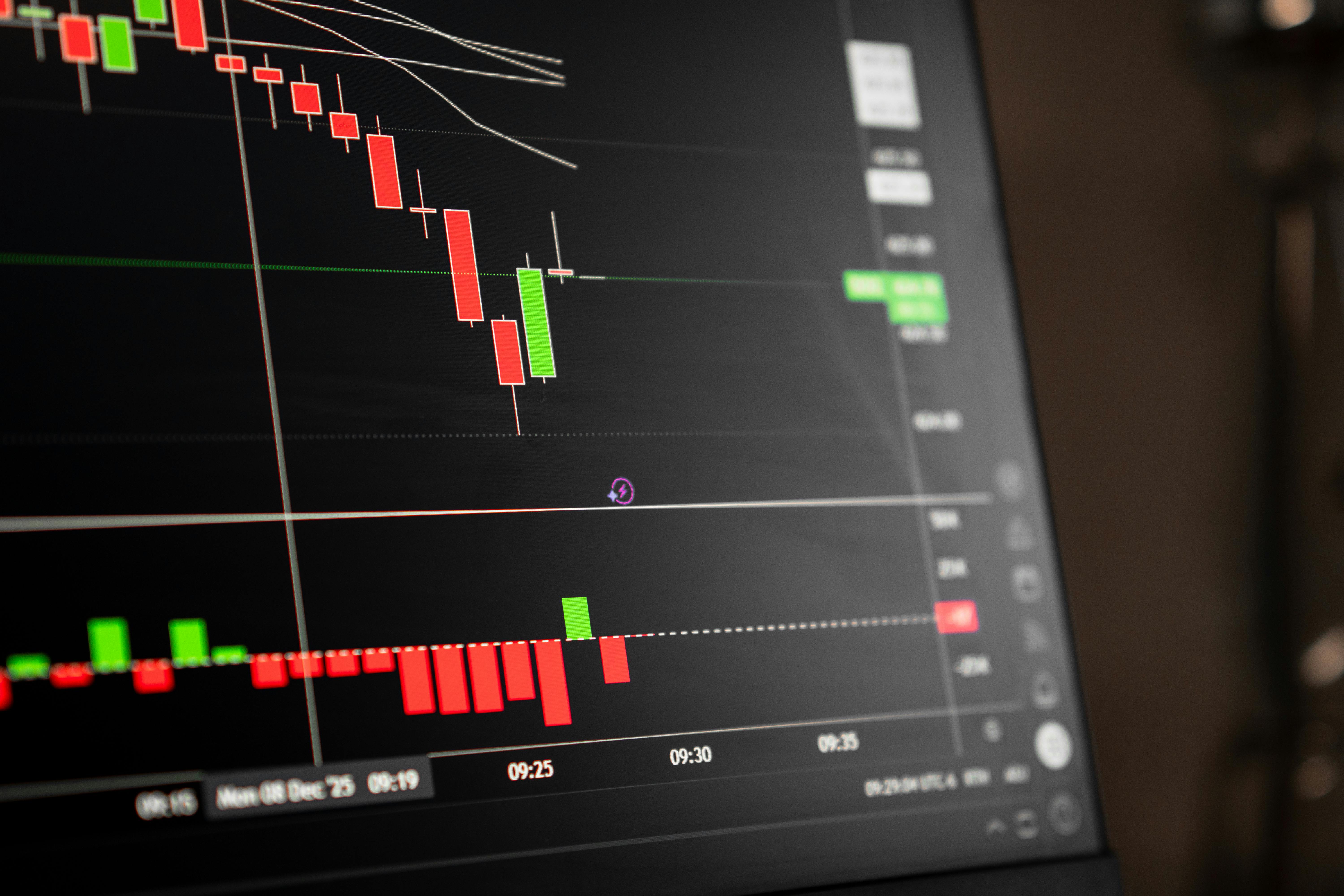
In 2025, an estimated 89% of global trading volume in digital asset markets was executed by automated agents — software designed to read market conditions, execute orders, rebalance portfolios, and in some cases, manage risk independently. This figure, drawn from recent research by ARK Invest, is strikingly close to what already occurs in traditional equity markets, where algorithmic trading accounts for roughly 80% of volume on U.S. exchanges.
And yet, the conversation around AI trading agents in digital assets has barely scratched the surface of what this shift implies for a region like Latin America.
Where technology is heading
Current generation AI agents have evolved well beyond simple bots that execute buy-sell orders based on price thresholds. Today, these systems integrate machine learning models that adapt in real time, processing on-chain data, order book signals, sentiment analysis from social media, and even macroeconomic indicators. Some agents are designed to detect inefficiencies across decentralized exchanges; others optimize execution strategies in fragmented liquidity pools.
The key advancement is autonomy. AI trading agents are increasingly capable of making decisions without human oversight, managing entire portfolios and adjusting strategy dynamically as conditions shift.
What this means for Latin America
Latin America remains one of the world's most active cryptocurrency markets. According to Chainalysis, the region accounted for nearly 10% of global on-chain transaction volume in 2024, with Brazil and Argentina leading adoption.
But access to sophisticated trading tools has historically been asymmetric. Institutional-grade infrastructure — smart order routing, algorithmic execution, and quantitative analysis — has remained largely out of reach for smaller asset managers, fintechs, and retail investors across the region.
AI trading agents could flatten this gap. By lowering the barrier to systematic trading, these tools offer a path toward democratized access to strategies once reserved for well-capitalized players in New York, London, and Hong Kong.
Systemic risks worth naming
The opportunity is real, but so are the risks. A market where 89% of volume is machine-driven introduces structural concerns.
First, there is the risk of flash crashes. When algorithms respond to similar signals in the same direction at high speed, cascading liquidations can amplify price moves far beyond what fundamentals justify. We've already seen this in traditional markets; in crypto — where circuit breakers don't exist — the consequences can be more severe.
Second, there's a transparency problem. Many AI agents operate within closed systems. Their decision-making logic isn't publicly auditable, and in some cases, not even well understood by their operators. In a region where regulatory frameworks are still maturing, this opacity introduces accountability gaps.
Third, there's the question of market fairness. If AI agents create a two-tier market — those who can afford and operate them vs. those who cannot — the democratization promise may prove hollow.
Infrastructure requirements
For AI trading agents to create real value in Latin America, certain conditions need to be in place. Reliable market data feeds across exchanges, standardized APIs for DeFi protocols, affordable compute infrastructure, and regulatory clarity on automated trading are all prerequisites.
Companies building AI-native trading infrastructure for the region have an opportunity to define the category. But doing so will require balancing sophistication with accessibility and innovation with guardrails.
The coming shift
Digital asset distribution in Latin America is about to be reshaped — not by a new token or protocol, but by a fundamental change in who (or what) is making trading decisions.
Whether this shift results in greater inclusion or simply new forms of market asymmetry will depend on how the infrastructure is built, and who it is built for.